All Categories
Featured
Steps for Filing Bankruptcy Claim in 2026
Table of Contents
Residential building and housebuilders are likewise exposed as increasing home loan rates moisten need and slow brand-new jobs. 5 Commodity cost volatility and leveraged financing structures increase vulnerability, particularly for midstream energy operators and makers depending on international trade. Fitch's outlook for Latin American midstream energy and European engineering and building stays neutral for 2026, signifying limited healing prospects.
college organizations as sectors dealing with relentless monetary strain. Rising labor costs, regulatory compliance costs, and declining enrollment rates add to installing functional difficulties. 7 These companies frequently run with thin margins and restricted flexibility, making them prone to liquidity shocks. Moody's cautions that low transparency and high leverage in private credit markets posture systemic risks.
Chapter 7 and Chapter 13 PathsIn summary, the outlook for 2026 recommends that bankruptcy risk will stay focused in sectors sensitive to interest rates, customer demand, and international trade dynamics. Retail, casual dining, realty, energy, health care, greater education, and non-bank financing are amongst the most exposed. Despite company size, ownership structure, or market, all companies should participate in a yearly strategic preparation process which includes a thorough examination of near- and long-lasting dangers and overall organizational health.

Financial Consequences of Declaring Bankruptcy in 2026
The understanding of the company's strengths and weak points will permit management to line up resources to take full advantage of delivery to consumers and reinforce competitive advantages in the market. Evaluating the market resolves the concern of how the industry's customer base is altering, and whether the existing plan is well matched to the most important top priorities of the high-growth and or high-profit segments.
Tactically dealing with a company's competition involves more than just acknowledging rivalsit's about utilizing competitive insights to form the positioning, messaging, and long-lasting technique. A company's competitive advantages need to be compelling enough to conquer those of its rivals. Even when a company sells items that are commoditized, it can have competitive advantages.
The earlier problems are determined and attended to, the more choices a business will have. Depending upon the level of distress, in addition to other internal and external factors, a having a hard time service might have several various methods readily available besides declaring personal bankruptcy. Proactive Performance Improvement Projects Companies may take advantage of the help of a organization efficiency enhancement team to assist identify ineffectiveness and opportunities for development.
Out-of-Court Restructuring For lots of companies in significant distress, an out-of-court procedure might still be a practical option to insolvency. In general, out-of-court restructuring processes can be accomplished with less cost and in a much shorter amount of time than personal bankruptcy while delivering positive outcomes for stakeholders. Insolvency If an out-of-court service is not readily available or wanted for some reason, a knowledgeable financial advisor can provide assistance through personal bankruptcy.
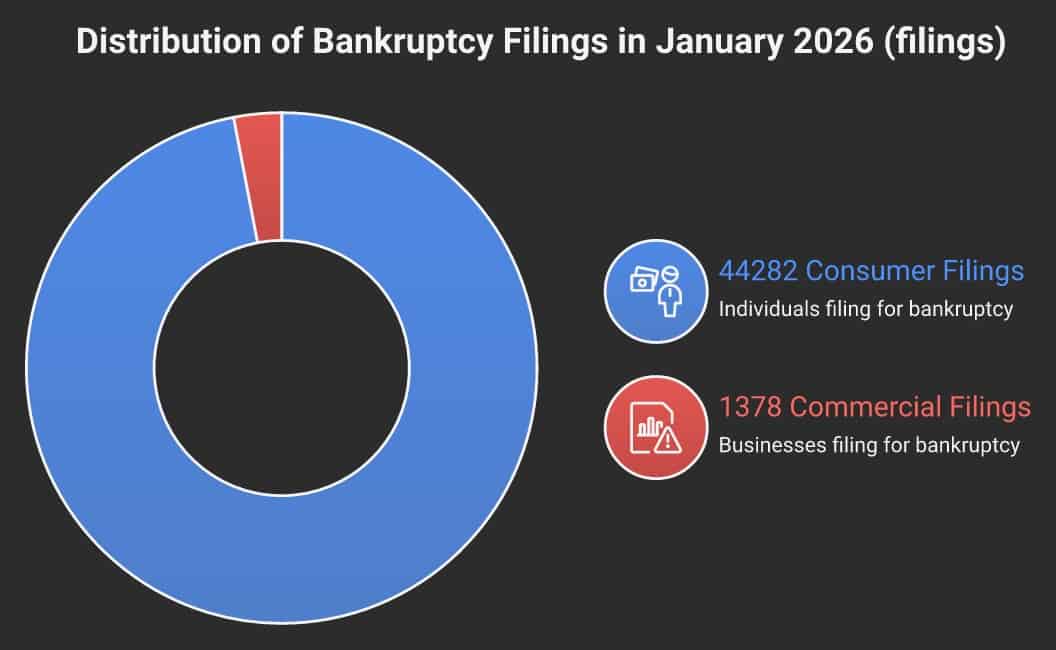
Stop Wage Garnishment Through 2026 BankruptcyTotal Insolvency Filings Increase 14% The 644 business Chapter 11 personal bankruptcy filings in April 2026 represented a 42% increase over the 454 filings recorded in April 2025, according to information offered by Epiq AACER, the leading service provider of United States bankruptcy filing information. Secret April 2026 data include: 3060 total industrial filings, a 21% boost from April 2025 (2520 ).
"Private insolvency filings are rising due to consistent pressures in customer credit markets, where car loan delinquencies stay near 15-year highs," stated Michael Hunter, Vice President of Epiq AACER. "These patterns are more intensified by a 26% rise in foreclosure filings in Q1 2026. Greater gas prices are straining durable goods and household budget plans, while continued home appreciation is rising property taxes and house owners' insurance coverage expenses.
Out-of-Court Restructuring For lots of companies in substantial distress, an out-of-court procedure may still be a practical alternative to personal bankruptcy. In basic, out-of-court restructuring processes can be accomplished with less cost and in a shorter quantity of time than bankruptcy while providing favorable results for stakeholders. Insolvency If an out-of-court service is not offered or preferred for some factor, a knowledgeable monetary advisor can provide support through personal bankruptcy.
Capstone's Financial Advisory Solutions group supplies a series of services, across the complete company lifecycle, designed to assist company owners, investors, and stakeholders resolve the root triggers of distress. Our teams have assisted having a hard time companies develop a path back to success and have helped healthy business style and implement long-lasting tactical plans for development.
Contact us if you have concerns or if you would like to talk to a member of our team about your particular issues. Overall Bankruptcy Filings Increase 14% The 644 commercial Chapter 11 insolvency filings in April 2026 represented a 42% increase over the 454 filings taped in April 2025, according to data provided by Epiq AACER, the leading supplier of United States bankruptcy filing data. Secret April 2026 information consist of: 3060 overall industrial filings, a 21% increase from April 2025 (2520 ).
Comparing Chapter 7 vs 13 under 2026 Laws
"These patterns are further intensified by a 26% surge in foreclosure filings in Q1 2026. Greater gas prices are straining consumer products and family budgets, while continued home appreciation is pushing up property taxes and homeowners' insurance coverage expenses.

Latest Posts

How to Initiate for Bankruptcy Efficiently in 2026
Key Updates in the Federal Bankruptcy Landscape
Long-Term Consequences of Filing